







Color Mixed

Discover your favorite blogs

Master sensual, confident all-black date night looks for 2026—liquid silk slips, velvet rebels, leather armor, cashmere quiet power, and monochrome monoliths with texture contrast, proportion play, and warm lighting that create magnetic, unforgettable evenings.

Read More  

Why black leather is dominating wardrobes in 2026—its versatility, aging beauty, textural authority, and how to build a modern, powerful black leather capsule with jackets, trousers, boots, and accessories that feel fierce yet timeless.

Read More  

Transform all-black outfits from basic to brilliant with 10 practical techniques: texture contrast, proportion play, finish hierarchy, subtle sheen, deliberate details, and confident attitude that make monochrome look expensive, intentional, and unforgettable in 2026.

Read More  

One hundred years after Coco Chanel’s revolutionary LBD, explore why the little black dress remains fashion’s most enduring and versatile piece—its history, modern 2026 interpretations, styling tips, and why it continues to represent quiet power, effortless elegance, and practical liberation.

Read More  

Uncover the many reasons all-black outfits feel especially powerful and inevitable this winter 2026 — from practical warmth and visual streamlining to emotional armor, reduced decision fatigue, cultural momentum, and the timeless elegance of black in cold weather.

Read More  

A reflective close to the black series — celebrating why black is the strongest, wisest, and most elegant place to begin any wardrobe, creative practice, or aesthetic journey, even when we eventually move beyond it.

Read More  

A heartfelt love letter to black—celebrating its quiet power, emotional honesty, timeless elegance, and the profound comfort and strength it offers across a lifetime of moments, moods, and memories.

Read More  

Celebrate the profound, often overlooked beauty of black—its ability to simplify, reveal, contain emotion, honor depth, and create space for true presence. A meditation on why black is not an absence but the most honest and elegant form of beauty.

Read More  

The ultimate reflection on why black remains undefeated across fashion, design, psychology, culture, and daily life is its timelessness, emotional intelligence, visual power, and ability to amplify presence through elegant subtraction.

Read More  

Explore why black is one of the most universally flattering colors across all skin tones, body shapes, genders, and ages—through optical illusions, practical advantages, emotional kindness, and real-world styling that celebrates rather than corrects.

Read More  

Explore why black is the natural and most powerful color for Dark Academia aesthetics in 2026 — its intellectual gravity, timelessness, mood amplification, and ability to make every detail (books, brass, leather, candlelight) feel more romantic and profound.

Read More  

Learn how black transforms basic pieces into extraordinary looks through masterful use of texture, proportion, finish, and intention. Discover the “black alchemy” principles that make simple outfits feel rich, expensive, and unforgettable in 2026.

Read More  
Debunking Color Myths: What Traditional Color Theory Gets Wrong

Traditional color theory taught us red-yellow-blue primaries, perfect complementary colors, and fixed warm vs cool rules. Many of these ideas are outdated or simply wrong. Discover the biggest color myths debunked by modern color science — from RGB vs RYB primaries and why complements don’t always make gray to the truth about warm vs cool colors and magenta.

Read More  
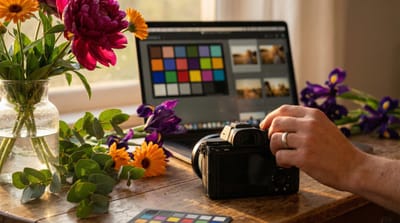
Color Science Tools Every Designer and Photographer Should Know

Master color accuracy with the essential color science tools every designer and photographer needs. From monitor calibration hardware (X-Rite i1Display, Datacolor Spyder) and spectrophotometers to software like DisplayCAL, Adobe Color, CIELAB/LCh analyzers, and color checkers, discover the must-have tools for consistent, professional results across screens, prints, and client deliverables.

Read More  
The Psychology and Science of Warm vs Cool Colors

Warm colors (reds, oranges, yellows) energize and stimulate, while cool colors (blues, greens, purples) calm and soothe. Explore the science behind why we perceive colors as warm or cool — from wavelengths and color temperature to psychological effects on mood, arousal, and behavior — plus practical tips for design, branding, and everyday life.

Read More  
Using CIELAB and LCh for Perfect Color Matching

CIELAB provides precise, device-independent color measurement using Lab* coordinates, while LCh (lightness, chroma, and hue) offers an intuitive polar view for easier adjustments. Learn how to use both for accurate color matching in printing, photography, design, textiles, and manufacturing— including ΔE calculations, hue/chroma corrections, and real-world workflows.

Read More  
HDR and Wide Color Gamut: The Next Level of Color Science

Discover how HDR (High Dynamic Range) and Wide Color Gamut (WCG) are revolutionizing visual experiences. Learn the science behind brighter highlights, deeper shadows, and more vibrant colors with standards like Rec.709 vs. DCI-P3 vs. Rec.2020 and why these technologies make digital content look closer to real life than ever before.

Read More  
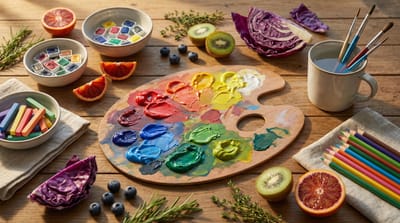
The Chemistry of Pigments: Why Paints and Dyes Behave Differently

Paints feel opaque and durable, while dyes soak in and create vibrant, translucent colors. The secret lies in their chemistry: pigments are insoluble particles suspended in a binder, while dyes are soluble molecules that chemically bond to materials. Explore solubility, particle size, lightfastness, opacity, and real-world applications in art, textiles, and manufacturing.

Read More  
Practical Guide to Color Management in Photography and Design

Struggling with colors that look different on screen, print, or online? This practical guide walks you through essential color management techniques—monitor calibration, ICC profiles, working color spaces (sRGB vs. Adobe RGB), soft proofing, and real-world workflows for photographers and designers to achieve consistent, accurate colors every time.

Read More  
Color Appearance Models: Making Digital Colors Look Real

RGB and CIE XYZ tell us the physics of color, but they don’t capture how colors appear under different lighting, backgrounds, or viewing conditions. Enter Color Appearance Models (CAMs) like CIECAM02 and CIECAM16 — the advanced tools that predict brightness, colorfulness, and hue as the human eye actually perceives them. Discover why these models are essential for realistic HDR displays, accurate color management, and making digital images look truly lifelike.

Read More  
Why Two People Can See the Same Color Differently

Ever disagreed with someone about the exact shade of a color? Discover the surprising science behind why two people can look at the same object and genuinely see different colors — from individual differences in cone cells and genetics to the brain’s role in color constancy and the famous #TheDress illusion.

Read More  
From Newton's Prism to Modern Colorimetry: A Brief History of Color Science

From Isaac Newton’s groundbreaking prism experiments in the 1660s to the development of CIE color spaces and modern colorimetry, discover how scientists turned the mystery of color into a precise, measurable science that powers today’s displays, printing, photography, and design.

Read More  
The Surprising Truth About Color Blindness and Human Vision

Most people think color blindness means seeing only in black and white. The surprising truth is far more intriguing. Discover the different types of color vision deficiency, why it affects more men than women, how the human eye actually works, and what the world really looks like to someone who is color blind.

Read More  
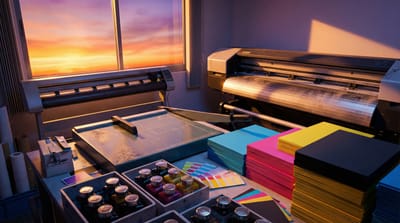
How Color Science Powers Modern Digital Displays and Printing

Discover how color science makes vibrant screens and accurate prints possible. Learn about the exciting technology that keeps colors looking the same and accurate on different devices and in print, from how digital screens use additive RGB mixing (like OLED and Quantum Dots) to how printing uses subtractive CMYK, along with the important roles of CIE color spaces and ICC profiles.

Read More  

E-mail us if you have any problems or anything else in general


About
Discover Color Mixed: Your go-to blog for insightful, expert articles on various topics. Learn about our passion for providing top-quality content.