HDR and Wide Color Gamut: The Next Level of Color Science
You watch a sunset on your phone or TV. The sky bursts with fiery oranges, deep purples, and glowing highlights that feel almost real — far more immersive than older videos.
This leap in realism comes from two powerful advancements in color science: High Dynamic Range (HDR) and Wide Color Gamut (WCG). Together, they move beyond the limitations of traditional Standard Dynamic Range (SDR) content, delivering brighter highlights, deeper shadows, and more vibrant, lifelike colors.
What Is Standard Dynamic Range (SDR)?
For decades, most content followed Rec. 709 (or sRGB for web), the standard for HD television and computer displays.
- Limited brightness range (typically 100 nits peak)
- Narrow color gamut (about 35–36% of visible colors)
- 8-bit color depth (256 levels per channel)
The result: good enough for everyday viewing, but often washed-out highlights, crushed shadows, and less saturated colors compared to real life.
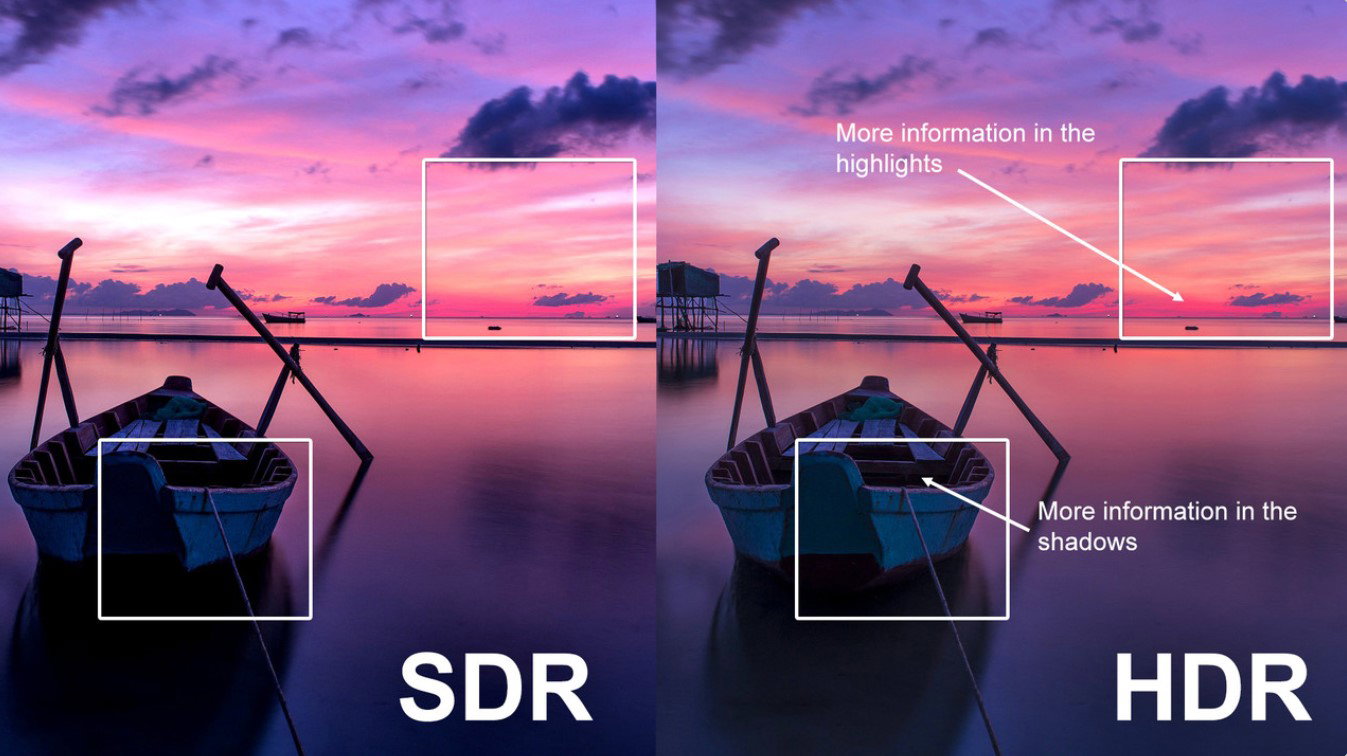
Caption: SDR vs. HDR comparison on the same scene. HDR reveals far more detail in bright highlights and deep shadows.
High Dynamic Range (HDR): More Brightness and Contrast
HDR expands the range of luminance (brightness) the display can handle—from very dark blacks to extremely bright highlights.
- Peak brightness can reach 1,000–10,000 nits (vs ~100 nits in SDR)
- Much higher contrast ratio
- Better preservation of detail in both shadows and highlights
HDR uses new transfer functions (EOTF) instead of traditional gamma:
- PQ (Perceptual Quantizer)—Used in HDR10, HDR10+, Dolby Vision
- HLG (Hybrid Log-Gamma) — Designed for broadcast compatibility with SDR displays
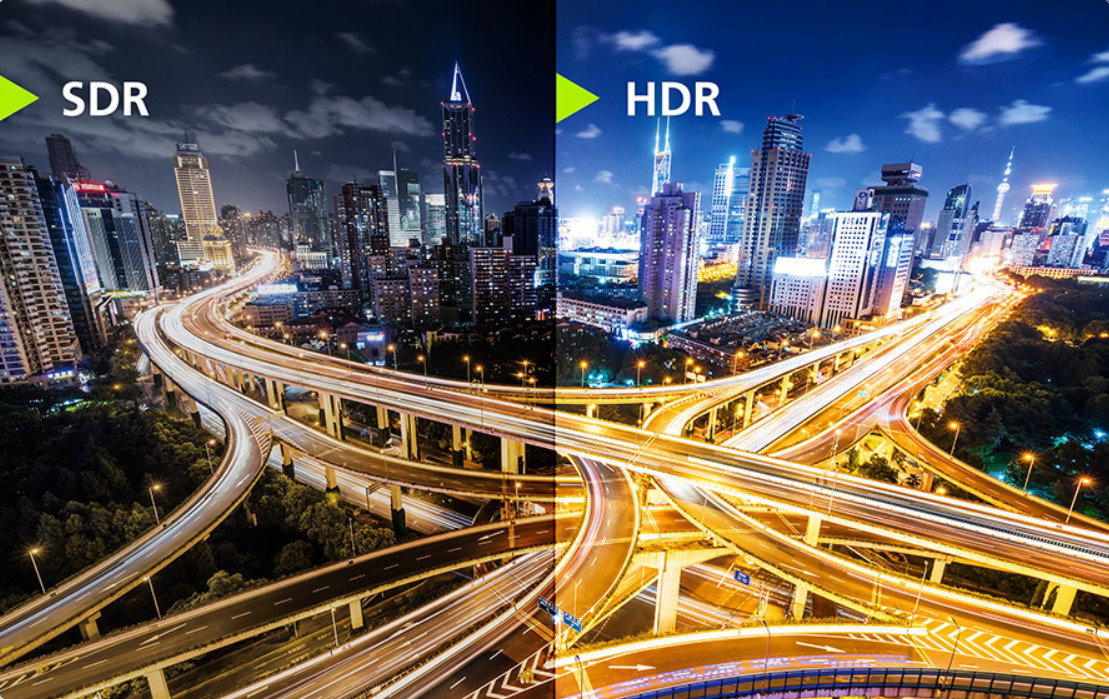
Caption: City night scene in SDR (left) vs. HDR (right). HDR preserves details in bright lights without blowing them out.
Wide Color Gamut (WCG): More Colors and Saturation
While HDR handles brightness, Wide Color Gamut expands the range of reproducible colors.
Key standards compared using the CIE 1931 chromaticity diagram:
- Rec.709 / sRGB — ~36% of visible colors (standard for HD)
- DCI-P3 — ~54% (used in digital cinema; common target for consumer HDR)
- Rec. 2020 (BT. 2020) — ~76% (the ultimate target for UHDTV and future-proof HDR)
WCG makes colors pop: richer reds, more natural greens, deeper blues, and smoother gradients.
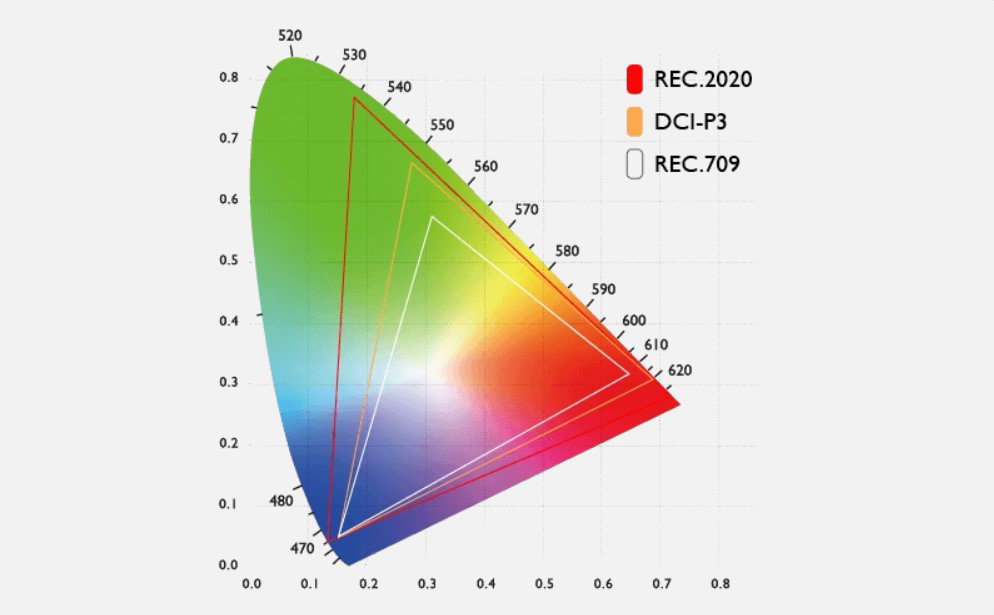
Caption: Color gamut comparison on the CIE diagram: Rec.709 (smallest), DCI-P3 (medium), and Rec.2020 (largest triangle).
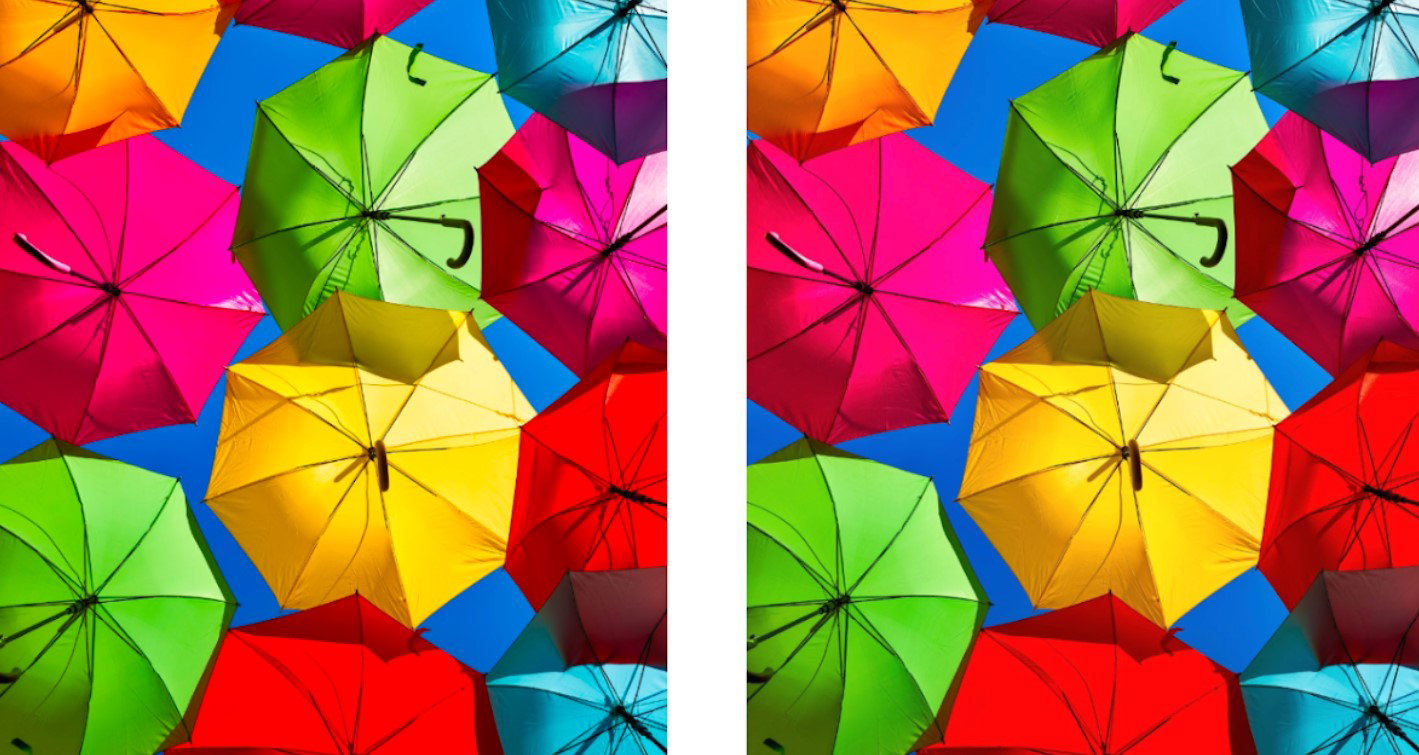
Caption: A vibrant umbrella scene showing the difference a wide color gamut makes—colors appear far more saturated and lifelike.
How HDR and WCG Work Together
HDR and WCG are often paired in modern standards like Rec. 2100 (for HDR-TV). They require:
- 10-bit or 12-bit color depth — To avoid banding in the expanded range
- Color management — Using ICC profiles, color appearance models (like CIECAM), and tone mapping to adapt content to different displays
- Metadata — Static (HDR10) or dynamic (Dolby Vision, HDR10+) to optimize the image scene-by-scene
Modern displays (OLED, QLED, Mini-LED) combine these with quantum dots or advanced backlighting to approach DCI-P3 or even parts of Rec.
2020 coverage.
Why This Matters in Practice
- Movies & Streaming — HDR content on Netflix, Disney+, or UHD Blu-rays looks dramatically more cinematic.
- Photography & Design — Editors working in wide-gamut spaces (Adobe RGB, ProPhoto) can now preview HDR-like results more accurately.
- Gaming — Games with HDR support deliver more immersive worlds with realistic lighting.
- Future-Proofing — Content mastered in Rec. 2020 will look better on tomorrow’s displays.
Note: Not all “HDR” TVs deliver true wide gamut or high peak brightness—check for coverage percentages (e.g., 95%+ DCI-P3) and real nits ratings.
The Science Behind the Magic
These advancements build directly on earlier color science:
- Trichromatic vision and opponent-process theory
- CIE color spaces (XYZ, LAB) as the universal reference
- Color appearance models that account for viewing conditions and adaptation
HDR + WCG bring us closer than ever to reproducing the full range of light and color the human eye can perceive.
Final Thoughts
HDR and wide color gamut represent the next evolutionary step in color science—moving from “good enough” reproduction to experiences that feel closer to reality.
As displays improve and more content is mastered in these formats, the gap between what we see on screen and in the real world will keep shrinking.
The future of visual media isn’t just higher resolution—it's richer, more accurate, and more emotionally engaging color.