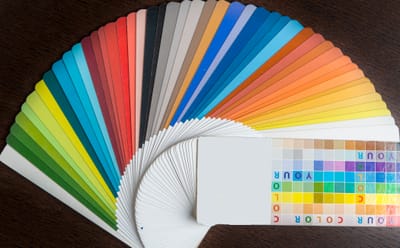
Traditional color theory taught us red-yellow-blue primaries, perfect complementary colors, and fixed warm vs cool rules. Many of these ideas are outdated or simply wrong. Discover the biggest color myths debunked by modern color science — from RGB vs RYB primaries and why complements don’t always make gray to the truth about warm vs cool colors and magenta.
Read MoreBlog #color science
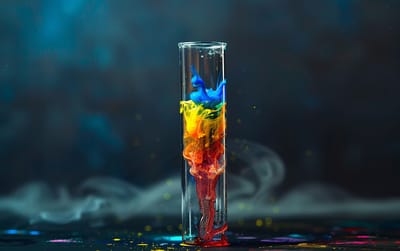
Discover how HDR (High Dynamic Range) and Wide Color Gamut (WCG) are revolutionizing visual experiences. Learn the science behind brighter highlights, deeper shadows, and more vibrant colors with standards like Rec.709 vs. DCI-P3 vs. Rec.2020 and why these technologies make digital content look closer to real life than ever before.
Read More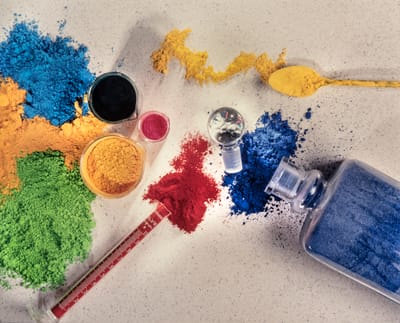
Paints feel opaque and durable, while dyes soak in and create vibrant, translucent colors. The secret lies in their chemistry: pigments are insoluble particles suspended in a binder, while dyes are soluble molecules that chemically bond to materials. Explore solubility, particle size, lightfastness, opacity, and real-world applications in art, textiles, and manufacturing.
Read More
Discover how color science makes vibrant screens and accurate prints possible. Learn about the exciting technology that keeps colors looking the same and accurate on different devices and in print, from how digital screens use additive RGB mixing (like OLED and Quantum Dots) to how printing uses subtractive CMYK, along with the important roles of CIE color spaces and ICC profiles.
Read More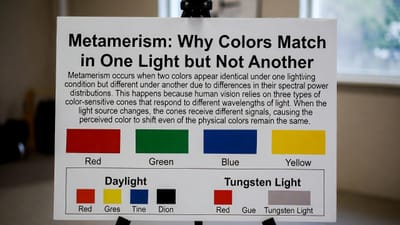
Have you ever matched two colors perfectly in the store, only to see them look completely different at home? That’s metamerism at work. Discover why certain colors that appear identical under one light source can look strikingly different under another, the role of spectral power distributions, and how this phenomenon affects design, printing, photography, and everyday life.
Read More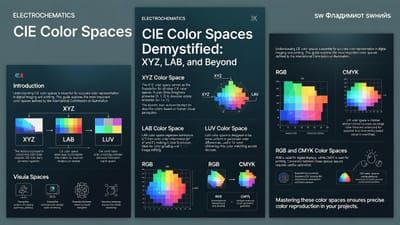
Confused by color spaces like CIE XYZ and CIELAB? Discover how the International Commission on Illumination (CIE) created the first device-independent color systems in 1931, why XYZ became the foundation of modern color science, and how LAB makes color perception more human-friendly. A clear, beginner-to-intermediate guide to the backbone of accurate color reproduction.
Read More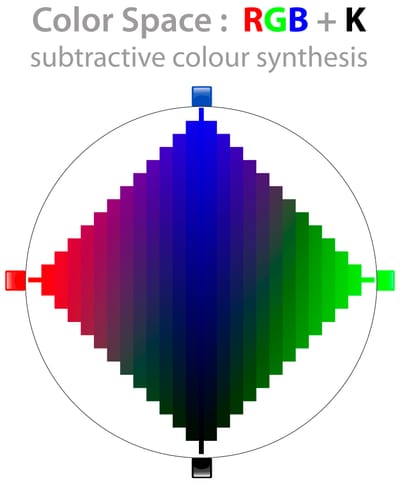
Discover the simple difference between additive and subtractive color mixing. Learn why your phone screen uses red, green, and blue (RGB) to create bright colors, while printers use cyan, magenta, and yellow (CMY/CMYK)—and why mixing paints and mixing lights behave completely differently.
Read More