Metamerism Explained: Why Two Colors Can Match Under One Light But Look Totally Different Under Another
You buy two “identical” red shirts in a brightly lit store. They look perfect together. But when you get home under your living room lights, one suddenly looks orange while the other stays true red. Frustrating, right?
This common phenomenon has a scientific name: metamerism.
Metamerism occurs when two colors appear to match under one light source but look noticeably different under another. It’s one of the most important — and often overlooked — concepts in color science.
What Exactly Is Metamerism?
Human color vision relies on three types of cone cells in the retina that respond to different wavelengths of light (roughly red, green, and blue). Our brain interprets the combination of signals from these cones as a specific color.
Two objects can stimulate the cones in exactly the same way under one type of light (they match) but produce different cone responses under another light (they mismatch). This happens because the objects have different spectral reflectance curves — they reflect light differently across the full spectrum, even if they look the same to our eyes under specific conditions.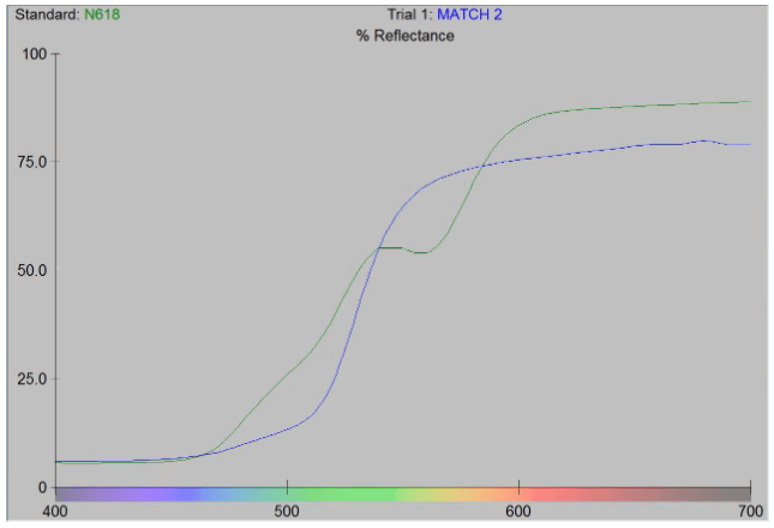
Metamerism in Color Matching for Industrial Coatings | Carboline
Caption: Example of metameric pair spectral reflectance curves. The two lines (standard and sample) cross at certain points, causing them to match under one illuminant but differ under another.
Why Metamerism Happens: The Role of Light Sources
The key culprit is the illuminant—the light source itself. Different lights have very different spectral power distributions:
- Daylight (D65) — Balanced across the spectrum, strong in blue.
- Incandescent / Tungsten (A) — Warm, rich in red and yellow, weak in blue.
- Fluorescent / LED — Often has spikes in certain wavelengths.
If two objects have different reflectance properties, a change in the light source changes which wavelengths reach your eyes, breaking the match.
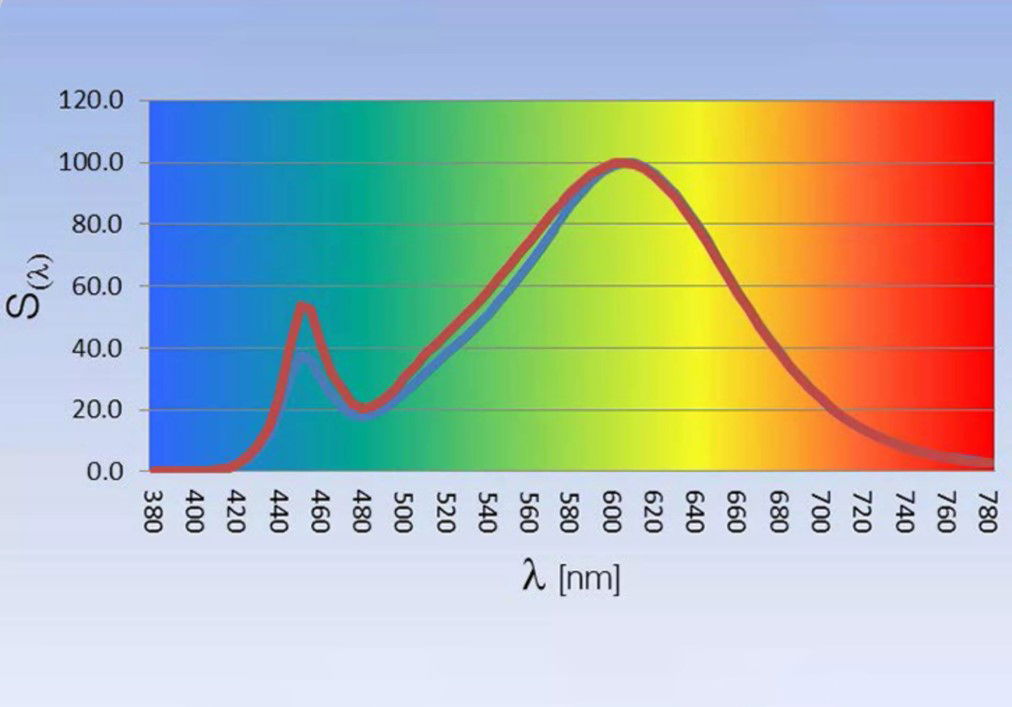
Light sources and illuminants | KONICA MINOLTA
Caption: Spectral power distribution of common illuminants. Note how daylight (blue line) and incandescent (red line) differ dramatically.
Real-World Examples of Metamerism
- Paint or fabric matching: A paint chip matches a wall perfectly in the store (under fluorescent lights) but looks off at home under daylight.
- Dental work: A crown or filling matches your teeth under the dentist’s bright operatory light but appears mismatched in normal room light.
- Fashion and textiles: Two garments look identical under store lighting but clash outdoors.
- Photography and printing: A product photo looks great on your calibrated monitor but shifts when printed or viewed on another screen.
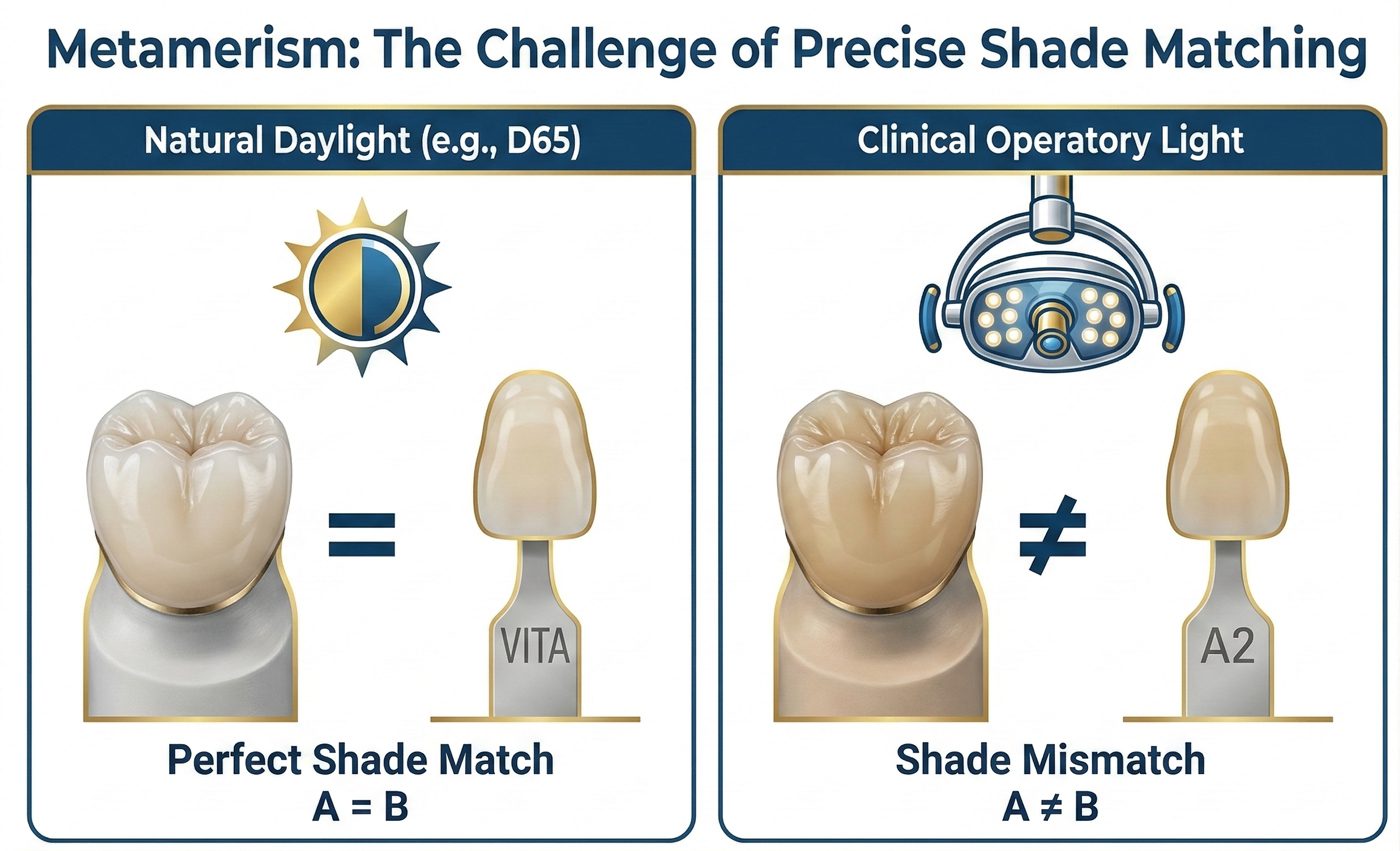
Mastering Dental Color Matching - Burbank Dental Lab
Caption: Classic metamerism example in dental shade matching — perfect match under daylight, mismatch under clinical lighting.
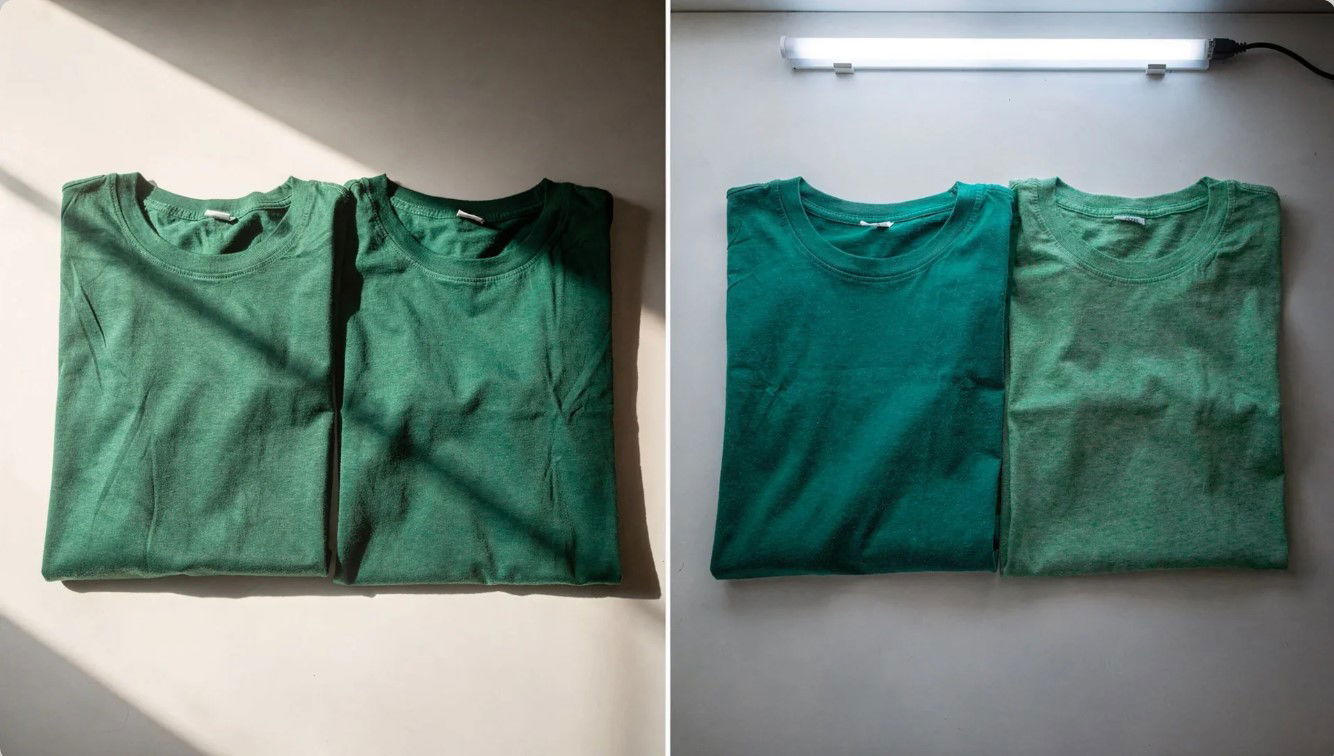
Metamerism: definition, causes, and testing methods
Caption: Green t-shirts that appear similar under daylight (left) but show clear differences under artificial fluorescent light (right).
How to Reduce or Manage Metamerism
- Use standardized lighting (e.g., D65 daylight simulators) for critical color matching.
- Choose materials with similar spectral reflectance (non-metameric matches).
- Work with CIE color spaces and color management systems (ICC profiles) that account for different illuminants.
- In design and printing, test colors under multiple light sources (a “light booth” with D65, A, and fluorescent options is ideal).

Metamerism: definition, causes, and testing methods
Caption: Professional color assessment light booth showing how the same objects can look different under varying illuminants.
The Bigger Picture
Metamerism reminds us that color is not an absolute property of an object — it’s a result of the interaction between the object’s reflectance, the light source, and our visual system.
Understanding metamerism helps designers, photographers, printers, and manufacturers achieve more consistent and reliable color across different viewing conditions.
Next time you notice colors shifting between environments, you’ll know it’s not your eyes playing tricks—it's physics and biology working together in a fascinating way.
Have you ever experienced a frustrating metamerism moment with clothes, paint, or makeup? Share your story in the comments!