Using CIELAB and LCh for Perfect Color Matching
You’ve matched a brand color on your screen, but the printed version looks slightly off. Or two fabric swatches that should be identical appear different under store lighting.
These frustrating mismatches happen because human color perception is complex, and simple RGB values don’t tell the whole story.
The solution lies in CIELAB (Lab*) and its polar cousin LCh (lightness, chroma, and hue). These perceptually uniform color spaces, based on decades of human vision research, let you measure, compare, and adjust colors with scientific precision.
Understanding CIELAB (Lab*)
CIELAB, developed by the CIE in 1976, is a device-independent color space designed to approximate how humans perceive color differences.
It uses three coordinates:
- L* — Lightness (0 = black, 100 = white)
- a* — Position on the green–magenta axis (negative = green, positive = magenta/red)
- b* — Position on the blue–yellow axis (negative = blue, positive = yellow)
Because CIELAB is relatively uniform, equal numerical distances roughly correspond to equal perceived differences — unlike RGB or XYZ.
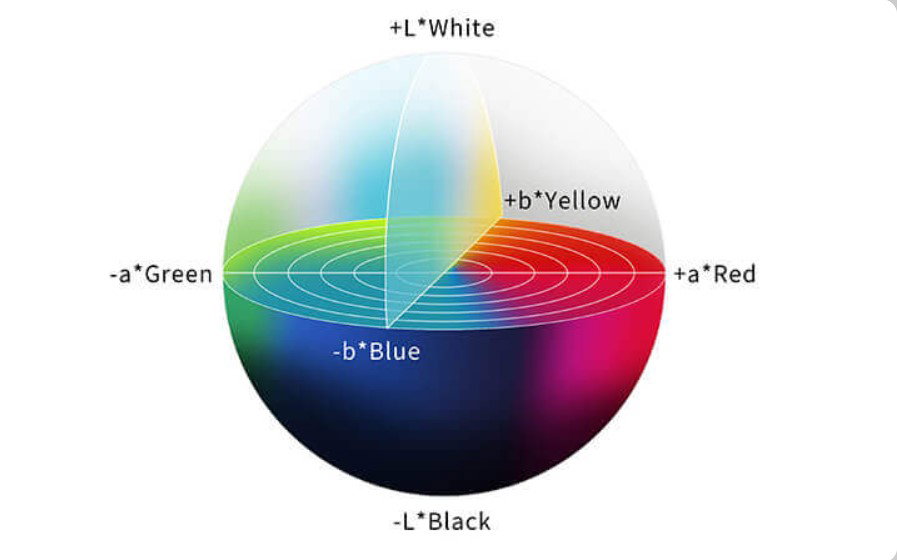
Caption: The CIELAB color is solid. L* runs vertically from black to white, while a* and b* form the horizontal color plane.
Why LCh Is Often More Practical
LCh converts the rectangular CIELAB coordinates into a more intuitive polar system:
- L* — Lightness (same as in CIELAB)
- C* — Chroma (saturation or color intensity, distance from the center)
- h — Hue angle (0° = red, 90° = yellow, 180° = green, 270° = blue)
LCh feels more natural for humans because we think in terms of hue, saturation, and brightness rather than abstract a* and b* values.
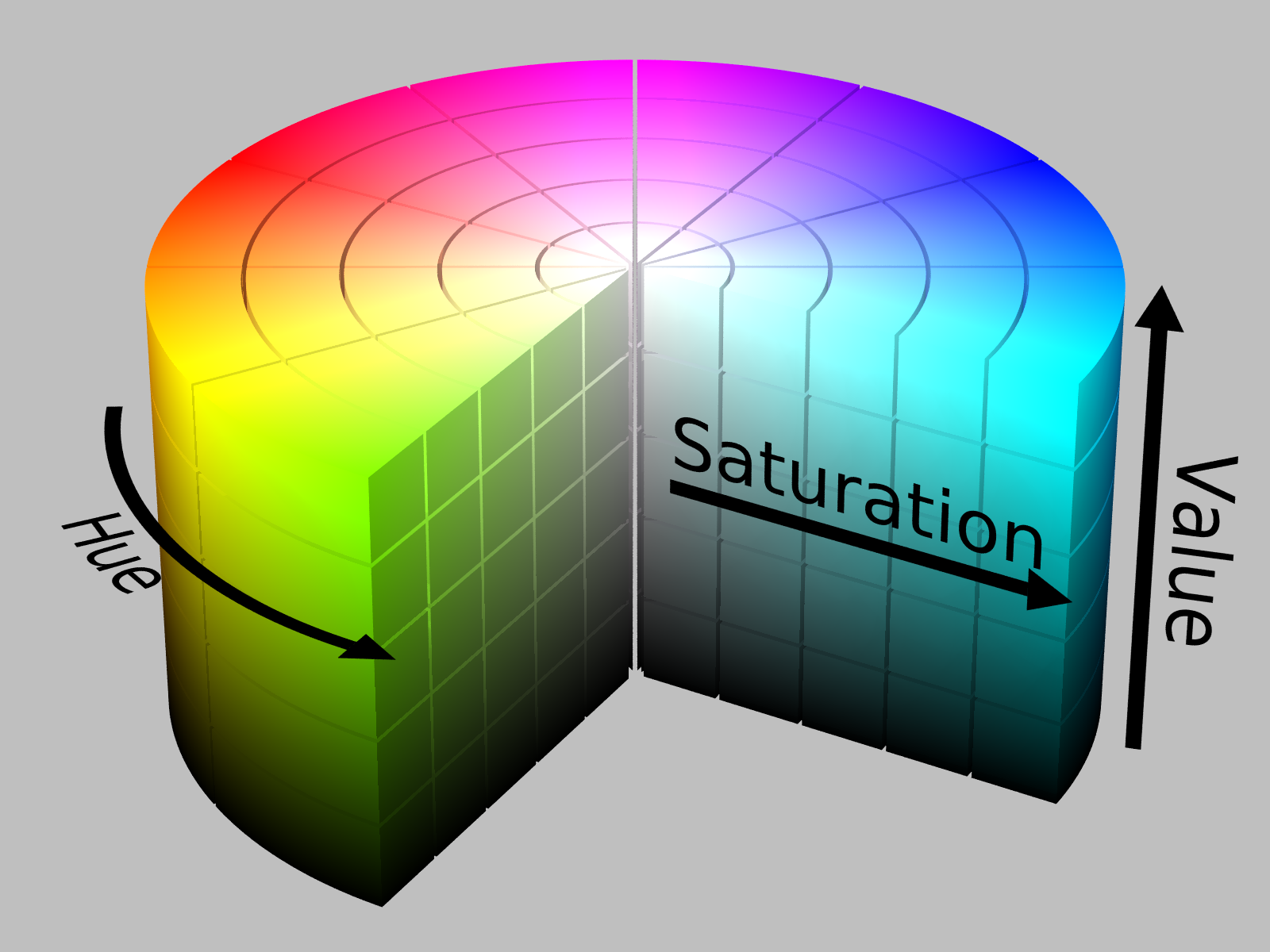
Caption: The LCh color space visualized as a cylinder. Hue rotates around the circle, chroma increases outward from the center, and lightness runs vertically.
Measuring Color Difference with ΔE
The real power of CIELAB comes from ΔE (Delta E)—the mathematical distance between two colors.
Common formulas:
- ΔE*ab (basic CIELAB) — Simple Euclidean distance
- ΔE*94 and ΔE*00 (CIEDE2000) — More advanced and perceptually accurate, accounting for how we see differences in different hue regions
Industry standards:
- ΔE < 1.0 → Imperceptible difference (excellent match)
- ΔE 1–2 → Noticeable only to trained eyes
- ΔE 2–3.5 → Acceptable for most commercial work
- ΔE > 5 → Clearly different colors
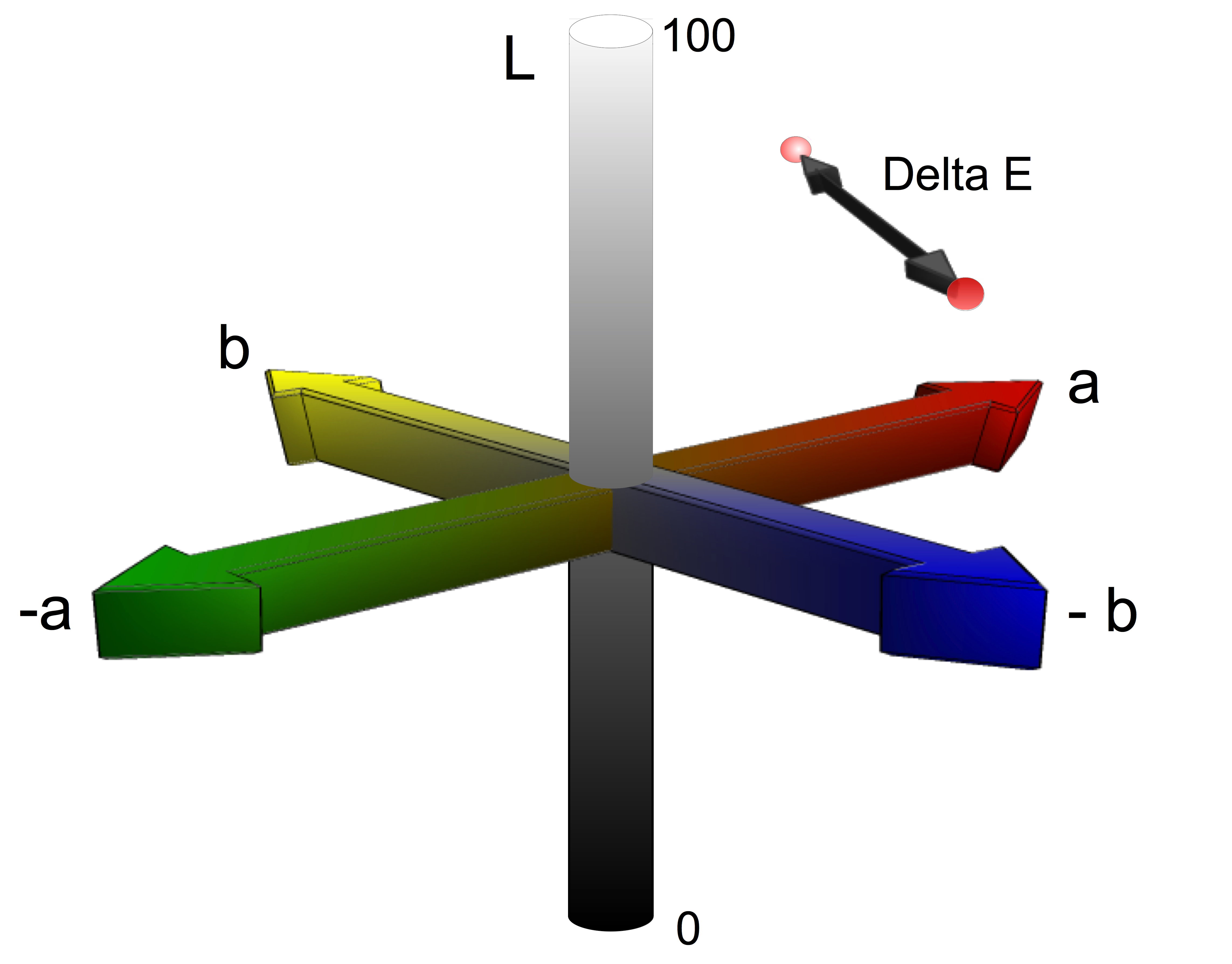
Caption: Visual representation of ΔE in CIELAB space — the straight-line distance between two color points.
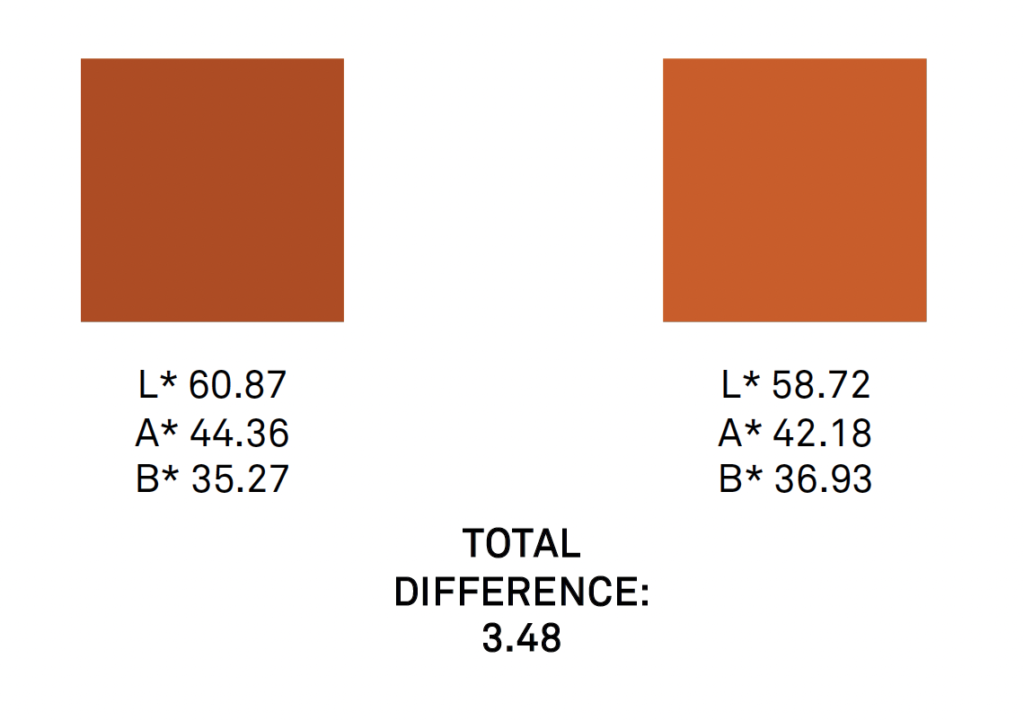
Caption: Real-world example: Two orange swatches with their Lab* values and total ΔE difference.
Practical Workflow for Perfect Color Matching
- Measure Reference Color Use a spectrophotometer to read the target color in CIELAB values.
- Convert to LCh (if needed) Many modern tools (Adobe Photoshop, ColorThink, X-Rite software) let you switch between Lab* and LCh instantly.
- Compare and Adjust
- Adjust Lightness (L)* to match brightness.
- Adjust Chroma (C)* to match saturation/intensity.
- Adjust the hue angle (h) to correct the color cast (e.g., if it is too yellow, lower the hue angle).
- Evaluate with ΔEAim for the lowest possible ΔE under your target illuminant (usually D50 or D65).
- Soft Proof and Verify Use your calibrated monitor and soft proofing with the correct output profile.
LCh shines when fine-tuning: increasing chroma makes a color more vivid without shifting hue, something that’s harder to visualize in rectangular ab-coordinates.
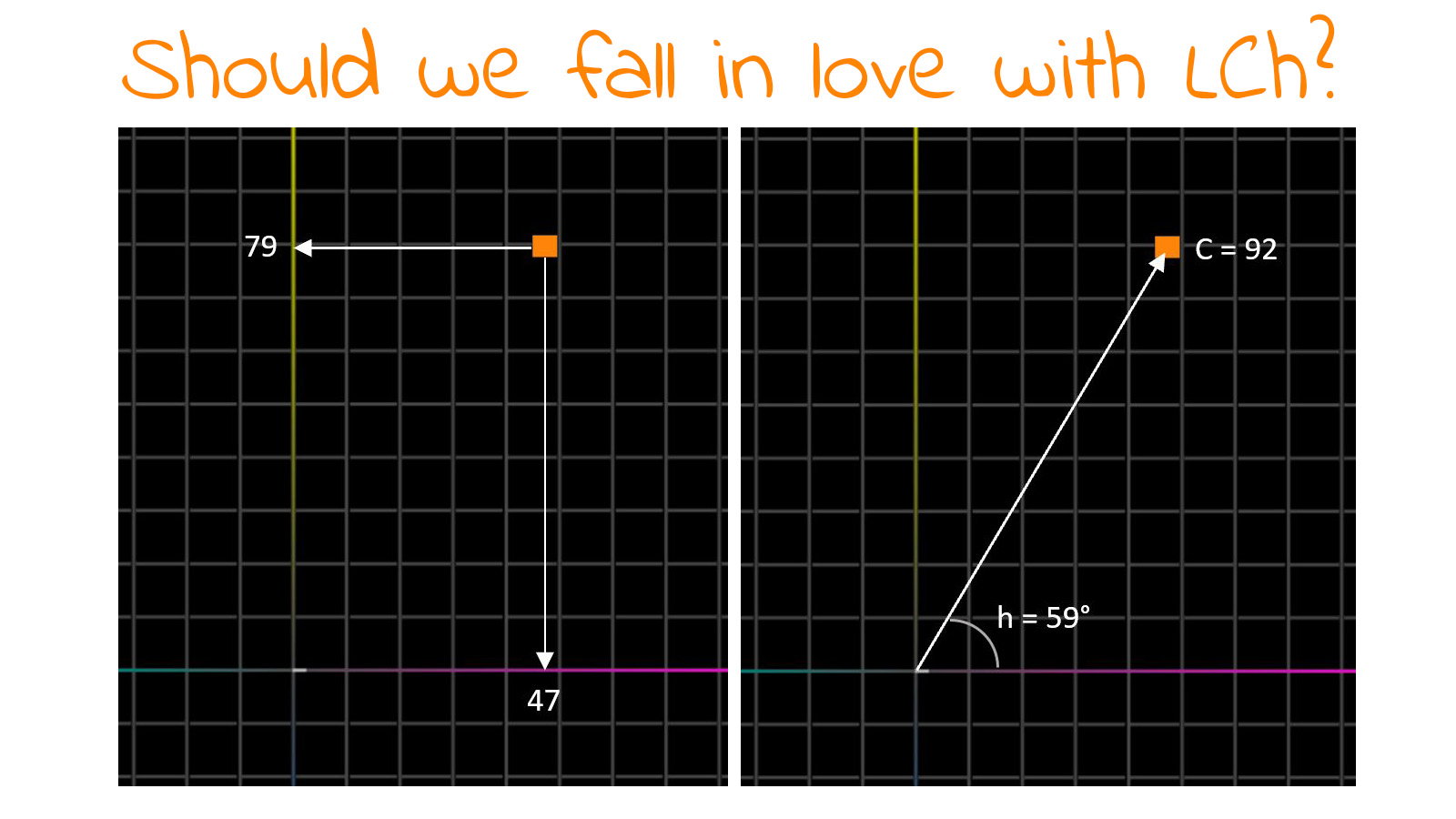
Caption: Side-by-side comparison showing why many color professionals prefer LCh for intuitive adjustments.
Real-World Applications
- Printing & Packaging — Match brand colors across different substrates and presses.
- Textiles & Fashion — Ensure consistent dye lots under various lighting.
- Product Design— Maintain exact color across materials (plastic, metal, paint).
- Photography — Accurate skin tones and product shots for e-commerce.
Pro Tips for Better Results
- Always measure under consistent lighting (use a light booth with D65 or D50).
- Prefer CIEDE2000 (ΔE00) for modern evaluations.
- When communicating colors, share LCh values alongside Lab*—they're more human-friendly.
- For critical matching, combine instrument measurement with visual assessment under multiple light sources.
Final Thoughts
CIELAB gave us a scientifically accurate way to measure color. LCH made it practical and intuitive.
Together, they form one of the most powerful tools in modern color management—turning subjective “that looks close enough” into objective, repeatable perfection.
Whether you’re matching a corporate logo, approving a fashion collection, or ensuring consistent prints, mastering CIELAB and LCh will dramatically improve your color accuracy and confidence.
The next time you need a perfect match, skip the guesswork. Measure in CIELAB, think in LCh, and let the numbers guide you to a flawless result.